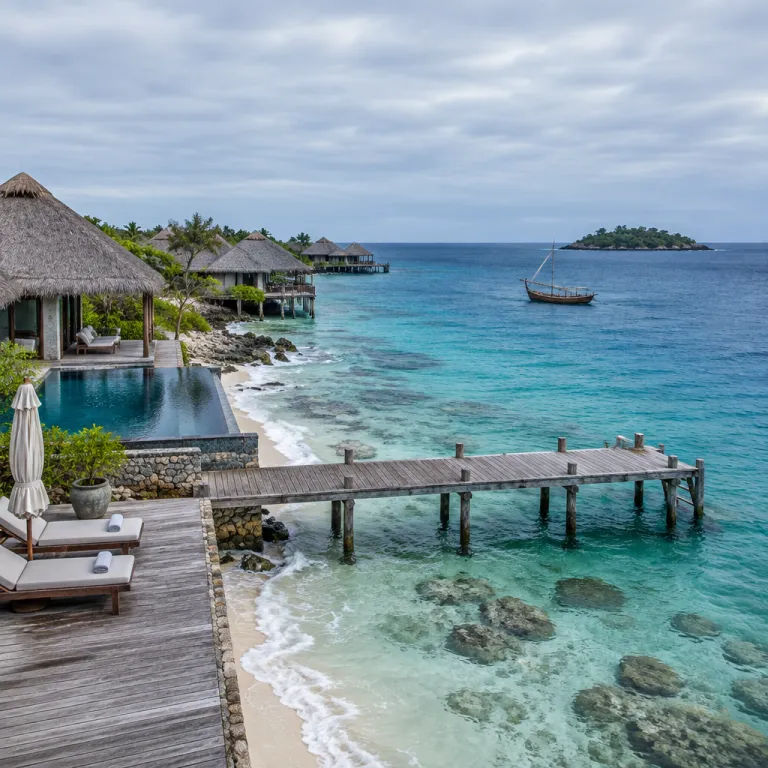
Why Pemba Island belongs on your luxury Mozambique itinerary
Pemba Island sits quietly in the northern reaches of the Zanzibar Archipelago, yet it pairs beautifully with the mainland charms of Pemba city in Mozambique on a single luxury itinerary. Many travelers fly into the coastal city of Pemba in Mozambique for a few days, then continue by flight or ferry via Tanzania to the greener island of Pemba for nights of deep relaxation. This twin-center approach lets you enjoy both the coral-rich Pemba Channel and the wide beaches of the Mozambican coast in one carefully curated journey.
From the air, the north coast of island Tanzania reveals a mosaic of mangroves, sandbanks, and luminous shallows that rival any beach in Zanzibar. On the ground, the atmosphere on Pemba Island feels more rural and traditional than on the main island of Zanzibar, with small villages such as Chake Chake and Wete punctuating the forested interior. Luxury travelers who value privacy over nightlife often find that Pemba Island resorts and eco-lodge retreats offer a calmer alternative to the busier beaches of Zanzibar and Mafia Island.
For guests arriving from Tanzania after a mainland safari, Pemba Island provides a soft landing where the pace slows but the service remains polished. You might spend the first day unwinding at a beach hotel on the Mozambican coast near Pemba city, then continue to a famous underwater villa at The Manta Resort on Pemba Island for several nights. This combination of Pemba Island in Zanzibar and Pemba city in Mozambique works especially well for travelers who want both sophisticated hotel comforts and a sense of remote island wilderness.
Choosing between Pemba city and island Pemba for your stay
When planning a premium trip, it helps to distinguish clearly between Pemba city in Mozambique and Pemba Island in Tanzania. Pemba city is a working port on the mainland coast, with a growing choice of hotel Pemba options that suit one or two nights before or after flights. By contrast, Pemba Island lies within Tanzania, and its resorts focus on longer stays that revolve around beaches, diving, and slow days on the water.
Travelers who prioritize logistics often begin with a night in Pemba city, Mozambique, to recover from long international flights. The city sits on a scenic bay, and several beach hotel properties line the nearby coast, making it easy to enjoy a relaxed day before continuing north. From here, you can connect to a short regional flight from Pemba city to Dar es Salaam or Zanzibar (usually one to three hours including connections), then transfer by road and boat to your chosen Pemba Island resort.
If your main goal is scuba diving or extended dives in the Pemba Channel, then staying directly on Pemba Island in Tanzania usually makes more sense. The island’s best resorts, including Fundu Lagoon and The Manta Resort, position you close to the most famous underwater walls and reefs. Many guests split their time, spending a few days in Pemba city for cultural experiences and markets, then several nights on Pemba Island for beaches, diving, and complete seclusion.
Coastal retreats and signature resorts on Pemba Island
The luxury landscape on Pemba Island is defined by a handful of carefully sited retreats rather than dense hotel strips. Fundu Lagoon, on the remote southwest coast of island Tanzania, is an eco-lodge-style property accessible only by boat, which immediately sets the tone for a stay focused on nature and privacy. Canvas tented suites sit along the beach and hillside, and many guests structure their days around early dives, long lunches, and quiet evenings under the stars.
On the northwest of Pemba Island, The Manta Resort has become globally known for its famous underwater room, a private floating suite anchored above a coral patch. Guests reach this villa by boat from the main beach hotel, then spend nights surrounded by reef fish and the soft sounds of the sea. The experience is particularly striking for travelers who have already enjoyed a safari in Tanzania and want a final, unforgettable coastal chapter before flying home.
Both Fundu Lagoon and The Manta Resort place strong emphasis on low-impact operations, which appeals to travelers seeking eco-lodge credentials without sacrificing comfort. Solar power, careful water management, and locally sourced menus are standard, while guided walks introduce you to Pemba Island’s flying fox colonies and spice gardens. These resorts also coordinate with professional operators for scuba diving, ensuring that diving around Pemba remains both safe and sustainable for future generations.
How Pemba compares with Zanzibar and Mafia Island
Many travelers weigh Pemba Island against the better-known island of Zanzibar or the quieter Mafia Island when planning their days on the coast. Zanzibar offers a wider range of hotel and beach hotel options, especially around Nungwi and Kendwa in the north, but it also attracts larger crowds. Pemba Island, by contrast, feels more intimate, with fewer resorts and beaches that often remain empty for much of the day.
Mafia Island, south of Zanzibar, is renowned for seasonal whale shark encounters and a strong focus on marine conservation. Pemba Island does not have the same whale shark reputation, yet its Pemba diving and scuba diving sites are often considered more dramatic, with steep walls and strong currents that appeal to experienced divers. For travelers who want to combine several islands, it is possible to link Zanzibar, Pemba Island, and Mafia Island in one itinerary, using regional flights and ferries where schedules permit.
Those who prefer a broader Indian Ocean circuit sometimes add Mozambique’s Bazaruto Archipelago after time on Pemba Island. The clear waters and dunes of Bazaruto offer a different style of coastal escape, which you can explore in more detail through this refined guide to the Bazaruto Archipelago for luxury coastal escapes. In practice, Pemba Island, Zanzibar, and Bazaruto each excel in different ways, so the best choice depends on whether you value cultural depth, famous underwater scenery, or wide open sandbanks most.
Diving, the Pemba Channel, and famous underwater experiences
Pemba Island has earned a serious reputation among divers for the sheer drop-offs and rich coral gardens of the Pemba Channel. This deep-water trench separates Pemba Island from mainland Tanzania and funnels nutrient-rich currents that support abundant marine life. As a result, scuba diving here often features vertical walls, overhangs, and schooling fish that feel more like a remote expedition than a casual holiday dip.
Most luxury resorts on Pemba Island operate or partner with professional diving centers that offer both introductory dives and advanced courses. Guests can complete several dives over a few days, gradually exploring more challenging sites as confidence grows, while non-divers enjoy the beach or gentle snorkeling. For many, the combination of a high-end resort, attentive service, and world-class diving around Pemba is the main reason to choose this island over busier parts of the Zanzibar Archipelago.
The Manta Resort’s famous underwater room is not a dive site in itself, yet it delivers a different kind of immersion in the Pemba Channel environment. At night, lights beneath the bedroom windows attract reef fish, creating a private aquarium effect that complements daytime scuba diving excursions. Travelers who split their stay between Fundu Lagoon and The Manta Resort often report that these contrasting perspectives on the same coast make their Pemba Island days feel especially rich and varied.
Planning your diving days and nights on Pemba
When arranging a luxury stay focused on Pemba diving, it is wise to plan at least four or five nights on the island. This allows for a relaxed arrival day, three full days of dives, and a final day to rest before any onward flight from Pemba Island to Zanzibar or Tanzania’s mainland. Many operators recommend avoiding heavy diving on the last day to respect safety intervals before flying.
Conditions in the Pemba Channel vary by season, with some months bringing stronger currents that suit experienced divers. Your hotel or eco-lodge will advise on the best time of year for your skill level, and can also arrange private guiding for those who want more personalized attention. Non-divers in your party can still enjoy the beaches, dhow sailing, and village visits, ensuring that every day and night on Pemba Island feels rewarding.
For travelers combining Pemba Island with a safari, it often works well to dive first, then finish with wildlife on the mainland. This sequence reduces the need to watch no-fly times before game drives and long overland transfers, and it also means you arrive on safari already rested from your days by the beach. Whether you are coming from Zanzibar–Pemba routes or directly from Tanzania’s parks, careful planning of dives, flights, and ferry options keeps the trip smooth.
Getting to Pemba Island and combining it with Mozambique
Access to Pemba Island usually involves a regional flight from either Zanzibar, Dar es Salaam, or occasionally Arusha after a safari. These flights, typically under one hour from Zanzibar and about the same from Dar es Salaam, connect you to Pemba Airport (IATA: PMA) near Chake Chake on Pemba Island, from where resort transfers continue by road and boat to the coast. Some travelers also route via Pemba city in Mozambique, using separate tickets and allowing at least one day between international and regional segments.
Pemba city in Mozambique is reached by domestic flights from Maputo or Nampula, and it serves as a useful hub for exploring the north coast. The city has a selection of hotel Pemba properties that cater to both business and leisure guests, with some offering direct beach access and others focusing on convenient city locations. From here, you can continue by road to quieter beaches or by small aircraft to remote lodges along the Mozambican coast.
For those interested in overland journeys, the northern corridor of Mozambique remains one of the region’s most intriguing yet under-explored routes. Travelers planning extended days on this coast can benefit from specialist advice, such as the insights shared in this guide to Nampula, Nacala, and the northern corridor. Combining these lesser-known stretches of Mozambique with a stay on Pemba Island in Tanzania creates a nuanced itinerary that balances raw coastal landscapes with polished resort comforts.
Ferries, flights, and regional links with Zanzibar
Within Tanzania, most luxury travelers rely on flights rather than ferries to move between Zanzibar, Pemba Island, and the mainland. Scheduled flight Pemba services link Pemba Airport (PMA) with Zanzibar City and Dar es Salaam, making it easy to add a few days in Stone Town before or after your island stay. While local ferry options exist in parts of the Zanzibar Archipelago, they are less predictable and rarely align with the expectations of high-end travelers.
Those who want to experience both Zanzibar and Pemba often start with a few nights on the main island’s north coast beaches. After enjoying the livelier scene there, they transfer by air to Pemba Island for quieter days focused on diving, sailing, and spa time. This progression from busier beaches to more secluded shores mirrors the way many travelers move from city energy to wilderness calm on a safari itinerary.
Although there is no direct ferry between Pemba city in Mozambique and Pemba Island in Tanzania, regional flight networks make it possible to link the two with a change in either Dar es Salaam or another hub. Travel planners familiar with both countries can help sequence these segments to minimize overnight stays in transit city hotels. With careful timing, you can enjoy breakfast on the Mozambican coast, then end the day watching sunset over the Pemba Channel from your villa deck.
Designing a luxury itinerary that balances safari, city, and coast
Many travelers approach Pemba Island as the coastal finale to a longer East African journey that includes safari and city experiences. A classic pattern begins with several days in a Tanzanian park such as the Serengeti, followed by a night in a gateway city, then a flight to Pemba Island for rest and diving. This sequence ensures that the most physically demanding activities happen first, leaving the beach and the Pemba Channel for gentle recovery.
Another elegant option is to start in Mozambique, exploring the north coast and perhaps the Bazaruto Archipelago before continuing to Tanzania. After a few days in Pemba city, Mozambique, you can fly onward to Zanzibar City, spend a day in Stone Town, then connect to Pemba Island for a final stretch of quiet beaches and dives. This route highlights the cultural contrasts between Lusophone Mozambique and Swahili Tanzania while keeping logistics manageable for a luxury traveler.
For guests with more time, it is possible to design a loop that includes Zanzibar, Pemba Island, and Mafia Island, each offering a different balance of beaches, diving, and village life. You might allocate three nights to Zanzibar’s north coast, four nights to Pemba Island for scuba diving, and three nights to Mafia Island for marine park exploration. Throughout, choosing high-quality hotel and eco-lodge properties ensures consistent comfort even as the landscapes and levels of remoteness change.
How many days and nights to spend on Pemba Island
For a first visit focused on both relaxation and activities, five to seven nights on Pemba Island works well. This allows for a gentle arrival day, several full days of diving around Pemba or snorkeling, and at least one day devoted purely to the beach and spa. Travelers who are passionate about scuba diving often extend their stay to ten days, giving time to explore a wider range of sites in the Pemba Channel.
If you are combining Pemba Island with Zanzibar or a mainland safari, consider how many travel days you will need between each segment. Short regional flights reduce transit time, but you should still allow a buffer day in case of schedule changes, especially when connecting to long-haul departures. Many luxury travelers choose to end their trip with three or four quiet nights at a single resort, such as Fundu Lagoon or The Manta Resort, to ensure they return home fully rested.
Ultimately, the ideal number of days and nights depends on your priorities, whether they are diving, beaches, cultural encounters, or simply time away from city noise. Pemba Island rewards unhurried stays, where each day can unfold at its own pace without a packed schedule. By aligning your hotel choices and regional flights carefully, you can create a coastal chapter that feels both indulgent and deeply grounded in the character of island Tanzania.
Sailing, culture, and low impact luxury on Pemba and the Mozambican coast
Beyond diving and beaches, both Pemba Island and the Mozambican coast offer rich opportunities for sailing and cultural immersion. Traditional wooden dhows still ply the waters of the Zanzibar Archipelago and northern Mozambique, carrying goods, fishermen, and increasingly, small groups of guests. Joining a dhow for a day sail or sunset cruise adds a timeless dimension to a luxury itinerary that might otherwise focus only on resort comforts.
Travelers interested in the heritage of Indian Ocean sailing can deepen their understanding through curated experiences such as those described in this feature on dhow sailing in Mozambique. On Pemba Island, similar excursions often combine snorkeling, sandbank picnics, and visits to small villages where you can learn about local fishing traditions. These outings complement days spent at your hotel by adding context to the landscapes you see from your villa terrace.
Low-impact luxury is increasingly important in both Tanzania and Mozambique, especially in fragile coastal environments. Many Pemba Island resorts operate as eco-lodge-style properties, limiting room numbers, supporting community projects, and protecting habitats used by species such as the endemic Pemba flying fox. On the Mozambican side, high-end lodges along the coast and islands adopt similar principles, ensuring that the benefits of tourism extend beyond the hotel gates into surrounding communities.
Wildlife, flying foxes, and forest walks on Pemba Island
While Pemba Island is best known for its marine life, the interior forests also hold unique wildlife, including the large Pemba flying fox. Guided walks from some resorts or from Chake Chake town take you into protected groves where these fruit bats roost in impressive numbers. Seeing them take off at dusk adds a memorable land-based highlight to days otherwise focused on the sea.
These forest excursions often pair well with cultural visits to spice farms and villages, giving a fuller picture of life on Pemba Island. Guests can learn how cloves, cinnamon, and other crops shaped trade routes that once linked Zanzibar, Pemba, and the wider Indian Ocean world. Returning to your beach hotel after such a day, the coast feels less like a backdrop and more like the living edge of a long maritime story.
For travelers who have already experienced big game on safari, these quieter encounters with bats, birds, and coastal communities provide a different kind of wildlife narrative. Instead of chasing dramatic sightings, you move at the pace of the island, letting each day unfold between forest shade and open beaches. In this way, Pemba Island and the Mozambican coast together offer a layered, low-impact luxury that goes far beyond a simple checklist of dives and resorts.
Key figures for planning luxury stays around Pemba Island
- Recent World Bank and national statistics indicate that tourism accounts for roughly a tenth of Tanzania’s gross domestic product, with coastal and island destinations such as Zanzibar and Pemba Island forming a significant share of international arrivals; this underlines the importance of booking reputable, licensed operators for flights and diving (see World Bank, “International Tourism, Number of Arrivals” and related country reports).
- UNESCO-affiliated marine research and regional reef surveys suggest that parts of the Western Indian Ocean, including the Zanzibar Archipelago and northern Mozambique, host well over 300 recorded coral species, making areas such as the Pemba Channel and Bazaruto among the most biodiverse reef systems in the region (for example, Western Indian Ocean Marine Science Association and UNESCO-linked assessments).
- Data released by Tanzania’s Civil Aviation Authority over the past decade show steady growth in regional flights linking Zanzibar, Pemba Island, and mainland cities, with domestic passenger numbers rising substantially, which has improved access for high-end travelers seeking multi-stop itineraries.
- Conservation groups working on Pemba Island report that the population of the endemic Pemba flying fox has rebounded from a few thousand individuals in the late twentieth century to many tens of thousands today, thanks to community-led protection of roosting forests supported in part by eco-tourism revenue (for instance, surveys cited by the IUCN and local conservation NGOs).
- Studies on marine protected areas in the Western Indian Ocean indicate that well-managed zones can increase fish biomass several-fold compared with unprotected reefs, a finding that supports the strict diving and fishing regulations enforced around key sites near Pemba Island and Mafia Island.
FAQ about Pemba Island, Mozambique, and luxury coastal stays
Is Pemba Island part of Mozambique or Tanzania ?
Pemba Island belongs to Tanzania and forms part of the Zanzibar Archipelago, while Pemba city is a mainland port in northern Mozambique. Travelers often combine both in one trip, flying between the two countries via regional hubs. Careful planning is needed because separate visas, immigration checks, and flight tickets usually apply.
How many days should I spend on Pemba Island for diving ?
For dedicated scuba diving, plan at least five to seven nights on Pemba Island. This gives time for an arrival day, several full days of dives in the Pemba Channel, and a final rest day before flying. Experienced divers who want to explore a wider range of sites often stay ten days or more.
Can I combine a safari with a stay on Pemba Island and in Mozambique ?
Yes, many luxury itineraries link a Tanzanian safari with coastal time on Pemba Island and the Mozambican coast. A common pattern is to start with wildlife viewing, then fly to Zanzibar or Pemba Island, and finally continue to Pemba city in Mozambique or Bazaruto. Working with a specialist operator helps align flights, ferries, and hotel bookings smoothly.
What is the best way to travel between Zanzibar and Pemba Island ?
The most reliable option for high-end travelers is a regional flight between Zanzibar City and Pemba Airport (PMA) on Pemba Island. These flights are short, usually under an hour, and connect well with international arrivals and departures. Ferries exist in parts of the Zanzibar Archipelago but are less predictable and rarely used in premium itineraries.
Are eco lodge and low impact options available on Pemba Island and in Mozambique ?
Several leading properties on Pemba Island, including Fundu Lagoon and The Manta Resort, operate with strong eco-lodge principles, limiting room numbers and supporting local conservation. On the Mozambican coast, many high-end lodges follow similar practices, especially in marine and island settings. Choosing these properties helps ensure that tourism revenue supports both communities and fragile coastal ecosystems.